

Some HMO landlords and tenants set for council tax saving
If you own an HMO in Wales, an important council tax change that came in on 3rd June 2026 could make a significant difference to your and/or your tenants’ costs.
The Welsh Government has enacted the Council Tax (Chargeable Dwellings and Liability for Owners) (Amendment) (Wales) Regulations 2026, which changes how Houses in Multiple Occupation are treated for council tax purposes.
In simple terms, Welsh Government’s view is that HMOs should generally be valued as one property with one council tax band, rather than being split into separate council tax assessments for each room or unit.
This matters because, over recent years, some HMO owners have seen their properties “disaggregated” by the Valuation Office Agency. That means a property that previously had one council tax band has been split into several separate bands.
For example, we’re aware of a seven-bedroom property that was previously a single Band D assessment (a council tax cost of £2,008.86 per year), but was later split into seven Band A assessments, taking the total annual council tax to around £9,374.68 (7 x £1,339.24)
Council tax is a cost that is often factored into the rent being charged, particularly where a property is let room-by-room and bills are included in the rent. So, when a property is split into several separate council tax assessments, the overall cost of providing/renting that accommodation can rise sharply.
One of the Welsh Government’s stated aims was to recognise the important role HMOs play in providing more affordable, flexible accommodation, and to address the concern that separate banding can make living costs unfairly expensive for people who rent rooms.
This change should help achieve that aim. By allowing affected HMOs to be treated as one dwelling again, the regulations should reduce the overall council tax burden in many cases, helping keep shared accommodation as affordable as possible for tenants.
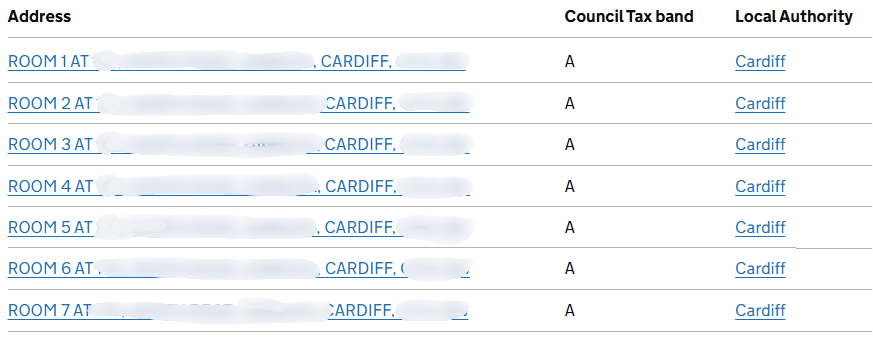
(This won't happen anymore)
Will the change from disaggregation (multiple council tax assessments) to aggregation (a single council tax assessment) happen automatically?
No, Welsh Government has confirmed that the regulations will not operate retrospectively. This means that if your property has already been assessed on a disaggregated basis, you will need to make a proposal to the Valuation Office Agency to amend the valuation list.
What should landlords do now?
If your HMO is already valued as one property with one council tax band, you needn’t do anything.
However, if it has been split into separate council tax bands, now is the time to check the position and prepare to make an application to the VOA once the regulations come into force.
Our view
This is a welcome change.
HMOs play an important role in the Welsh rental market, particularly in areas like Cardiff where there is strong demand for flexible, room-based accommodation.
Where one shared house has been split into several separate council tax assessments, it has often resulted in a disproportionate overall bill. In many cases, that has made the property more expensive to run without improving the accommodation for the people living there.
Bringing affected HMOs back to one council tax valuation should create a fairer, simpler and more consistent system. It should also help support the Welsh Government’s aim of keeping shared accommodation affordable for tenants.
As always, the exact position will depend on the individual property and how the VOA assesses it. But for landlords who have been hit with multiple council tax bills for one HMO, this is definitely something to look into. It is also worth tenants being aware and prompting their landlords, as it should mean a saving for them too.

Free rent reviews and market appraisals
Find out what your Cardiff property could be achieving and whether your current tenancy structure is working in your favour.
No obligation, just honest advice.
Like what you’ve read? Keep up with our latest landlord tips and updates by following Nik, our Director of Operations, over at The Cardiff Letting Agent onInstagram.
The information contained within this article was correct at the date of publishing and is not guaranteed to remain correct in the present day.