

Ask Nik: “There was a fire in my block of flats – what happens next?”
Question from a landlord:
Hi Nik,
There was a fire in the block of flats where my rental property is. The fire service attended and everything seems under control now, but it’s left me wondering what happens next from a landlord’s perspective.
Is there anything I should expect or prepare for after an incident like this?
Thanks,
Mark.
---------
Nik’s reply:
Hi Mark,
I’m sorry to learn of that. I hope it wasn’t a major incident and, most importantly, that nobody was hurt.
As I don’t have much detail about the circumstances, I’ll answer this based on a recent experience we had with a landlord client of ours, and how our comprehensive approach to compliance allowed them to easily answer the questions the Fire Service posed to them afterwards.
What happened
The property was a converted building in Cathays made up of three flats – a three-bedroom flat on the first floor occupied by three tenants, a two-bedroom flat below it, and a one-bedroom flat above. The same person owns all three flats and the freehold for the building.
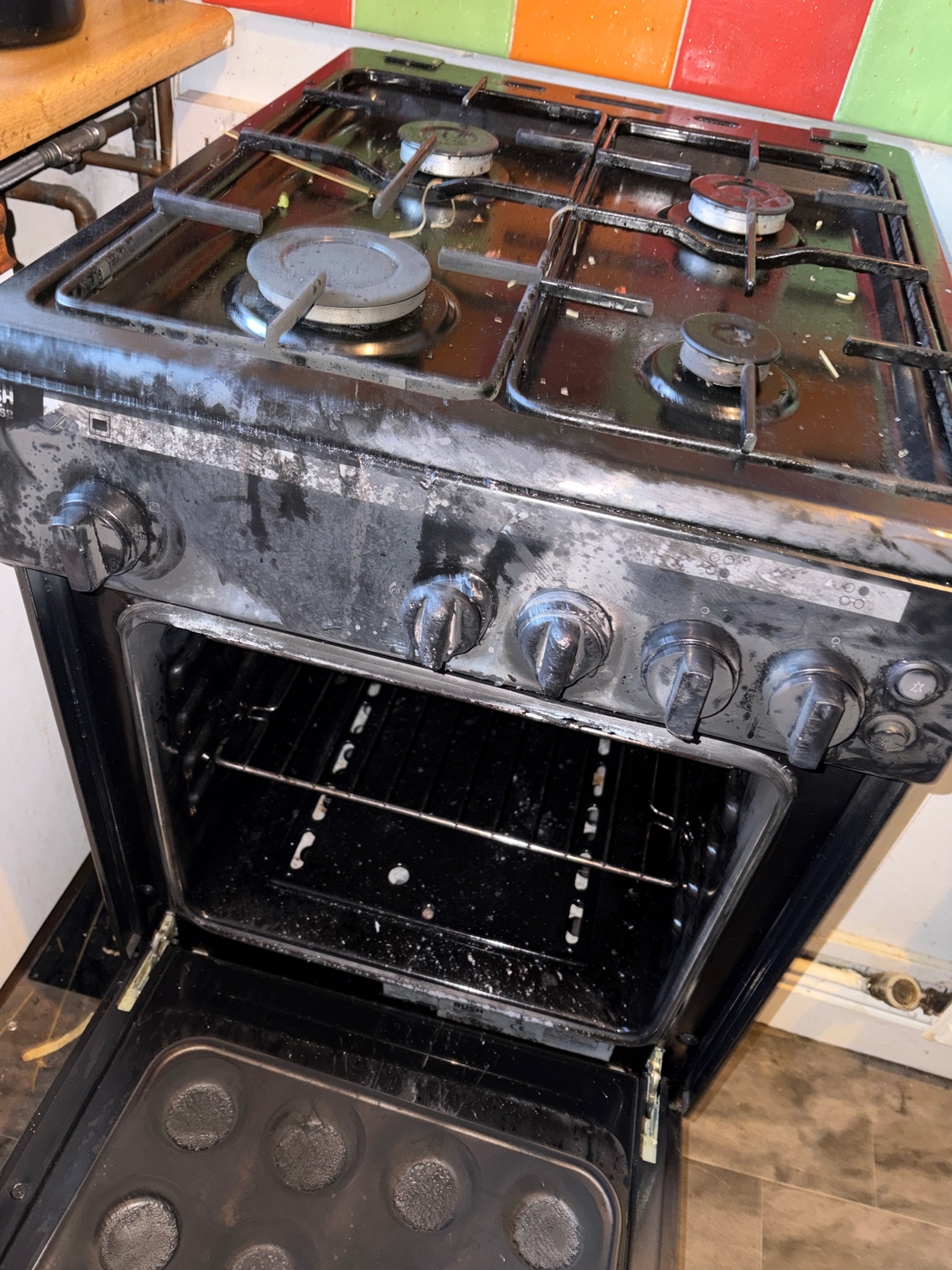
The fire itself started in the kitchen of the first-floor flat when a tenant was heating oil for cooking. Thankfully, it was contained to a small area of the kitchen and quickly brought under control once the Fire Service arrived. Nobody was injured, and the damage was limited.
A lot of people think that once the Fire Service put the fire out and drive away, that’s the end of the story. In reality, it isn’t. They will normally open a file and ask questions. Their aim is to understand how the fire started and whether the building was being managed in accordance with fire safety legislation. Ultimately, it’s about ensuring the safety of everyone living in the property.
The fire risk assessment
One of the first things they asked to see in this situation was a Fire Risk Assessment.
The Fire Service enforce The Regulatory Reform (Fire Safety) Order 2005, which makes it a legal requirement for there to be a fire risk assessment covering the non-domestic (communal) areas of blocks of flats. It’s the responsibility of the “responsible person” – typically the freeholder – to ensure that this assessment is in place.
A Fire Risk Assessment is essentially a written record identifying potential fire hazards in a building, the people who may be at risk, and the measures in place to reduce those risks. It should also set out the fire detection and warning systems in place to alert occupants if a fire occurs. If the assessor identifies ways the level of risk could be reduced further, the assessment should include a recommended improvement plan and suggested timescales for carrying out those works.
This isn’t a document that should just sit in a drawer forever. The legislation states that the responsible person must review the assessment regularly to keep it up to date – particularly if there’s reason to believe it may no longer be valid, or if there have been changes to the building or how it’s used.
For landlords who don’t have one, however, the situation can quickly become much more serious. The fire service are the enforcing authority for this legislation, and if you’re unable to produce a Fire Risk Assessment when asked, you run the very real risk of enforcement action or prosecution.
How strongly they pursue this might depend on the circumstances – particularly how serious the fire was and whether anyone was injured. Either way, not having a Fire Risk Assessment in place is, quite literally, playing with fire.
Fire alarm systems
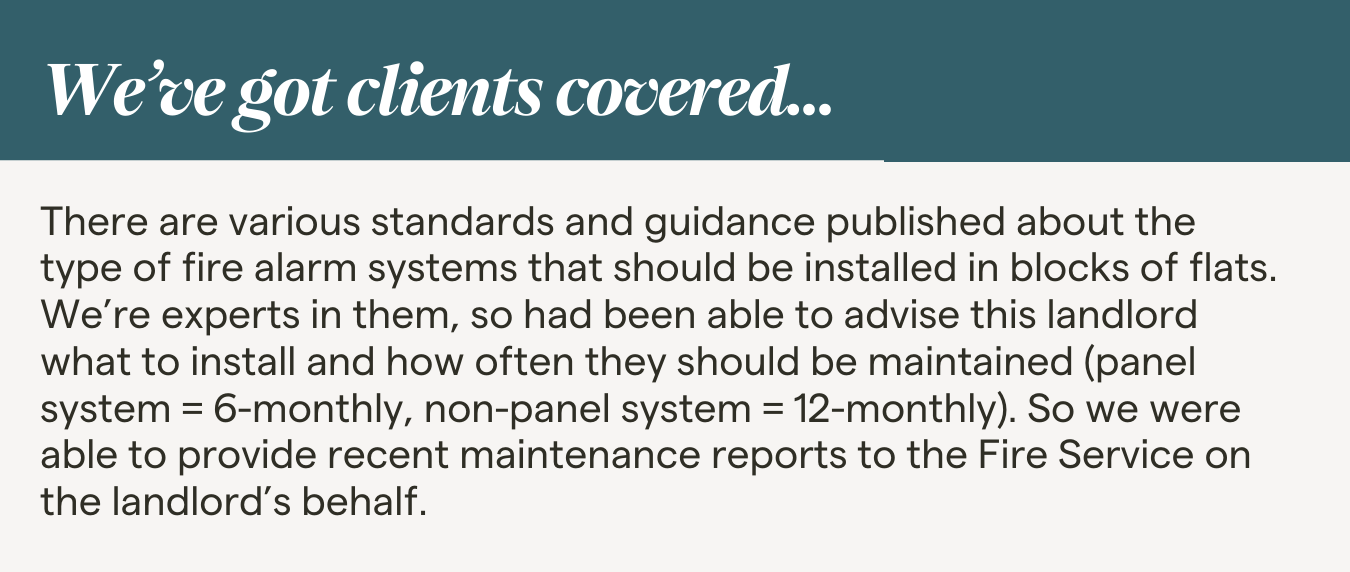
The Fire Service also asked to see details relating to the fire alarm systems in both the flat itself and the communal areas. Specifically, they wanted confirmation of the type of system installed, how the alarms interlink between the flats and communal areas, and evidence of recent maintenance by a competent person.
Testing records
They also asked for records showing weekly and monthly testing of the communal fire alarm system. As part of our management service, we carry out regular testing and inspections for this landlord, so we were able to provide clear records of these visits to satisfy their queries.
All of this documentation helps demonstrate that the landlord and managing agent have taken reasonable steps to protect both the building and the people living in it.
What if the fire had happened in a building that wasn’t a block of flats?
Properties that are let room-by-room also require a Fire Risk Assessment for the shared areas, as these are classed as non-domestic spaces. So, the Fire Service would’ve no doubt asked to see a copy of it in this instance too.
For houses let on a single tenancy, there isn’t a specific legal requirement to have a Fire Risk Assessment. However, we would always recommend ensuring that the fire alarm system is inspected and maintained regularly so you know it’s working correctly – and, crucially, you can prove it is to anyone who may ask.
Finally, if the property is licensable as a House in Multiple Occupation (HMO), there is usually an additional requirement. HMO licences in Cardiff include a condition stating that the licence holder must inform the local council of any fire at the property within 24 hours of becoming aware of it.
While a fire can be a stressful and unsettling event, situations like this reinforce why staying on top of safety compliance is so important. Having the right systems in place – and the records to prove it – protects both the occupants of the property and the landlord if the authorities come asking questions afterwards.
Hope this helps.
Cheers,
Nik
Director of Operations
CPS Homes
Got a lettings question on your mind? Send it my way - I reply privately to every message, and I pick one each month to feature here (always anonymously).

Keep up with our latest landlord tips and updates by signing up for our landlord newsletter.
The information contained within this article was correct at the date of publishing and is not guaranteed to remain correct in the present day.