
Cardiff Property Investment

Before you invest in anything, you should always understand the risks and rewards. We have produced a page on Property Investment in Cardiff. Once you have worked out your costs involved with renting out property, you can use a yield calculator to work out your return on investment (ROI).

If you haven't already got a mortgage in place, then the calculator below to the right will allow you to work out the monthly repayments.

Lettings Legislation for Landlords

CPS Homes have produced the following summary of the legal responsibilities for landlords.

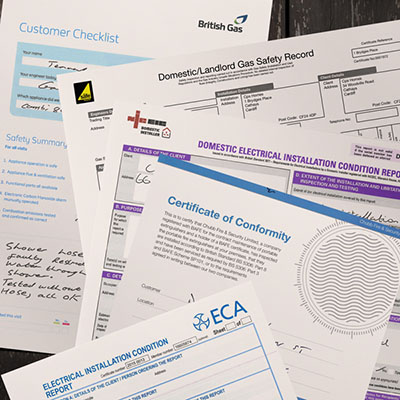
Gas - Annual safety check

All gas appliances and flues in rented accommodation must be checked for safety within 12 months of being installed, and thereafter at least every 12 months by a Gas Safe registered gas engineer.

Copies to tenants: A copy of the safety certificate issued by the engineer must be given to each new tenant before their tenancy commences, or to each existing tenant within 28 days of the check being carried out.

Electrical Lettings Regulations

There are several regulations relating to electrical installations, equipment and appliance safety which affect landlords. Although with tenanted property there is currently no legal requirement for an electrical safety certificate (except in the case of all HMO's) it is now widely accepted in the letting industry that the only safe way to ensure safety, and to avoid the risk of being accused of neglecting your 'duty of care', or even of manslaughter is to arrange such an inspection and certificate.

As part of our commitment to providing exceptional quality of properties throughout Cardiff, CPS Homes insist on all of our managed properties having an electrical safety certificate.

Fire & Furniture Lettings Legislation

The Furniture and Furnishings (Fire) (Safety) Regulations 1988 provide that specified items supplied in the course of letting property must meet minimum fire resistance standards. Items which comply will have a suitable permanent label attached. Non-compliant items must be removed before a tenancy commences.

Fire Detection in Rented Property

Whilst there are limited laws for fire detection regulations in rented property, Cardiff County Council have produced recommended measures for fire detection in rented property. As a landlord if you don't comply with the recommended regulations you will risk facing prosecution if any accidents do occur. If your property is an HMO then there are further legal requirements to adhere to.

Is your property a House in Multiple Occupation (HMO)?

If your property is on 3 or more levels and let to 5 or more tenants comprising 2 or more households it will be subject to mandatory licensing by Cardiff County Council. Whether mandatory licensing as above applies or not, if there are 3 or more tenants not all related in any property, it is still likely to be an HMO, and special Management rules apply.

Please contact our Albany Road branch for more on HMO licensing or contact Cardiff County Council.

The Housing Health and Safety Rating System (HHSRS)

The HHSRS provides an analysis of how hazardous a property is through assessment of 29 potential hazards found in housing. Landlords have to maintain their properties to provide a safe and healthy environment. The HHSRS is enforced by Cardiff County Council. Click here for further information

The Tenancy Deposit Scheme

From April 2007, all deposits taken by landlords and letting agents under Assured Shorthold Tenancies (AST's) in England and Wales must be protected by a tenancy deposit protection scheme. Landlords and letting agents must not take a deposit unless it is dealt with under a tenancy deposit scheme. To avoid any disputes going to court, each scheme will be supported by an alternative dispute resolution service (ADR). Landlords and letting agents will be able to choose between two types of scheme; a single custodial scheme and two insurance-based schemes. Learn more here.

Energy Performance Certificates - EPC's

All properties, which are rented out require an EPC (Energy Performance Certificate). This shows your tenants how energy efficient the property is, as well as the carbon dioxide emissions. This must be provided to tenants before the tenancy agreement is signed, and can be enforced by Trading & Standards. An EPC lasts for ten years, although you may wish to have your property re-assessed if you carry out energy saving works. More information can be found from direct.gov.uk

Overseas Landlords

Even if you live outside the UK, under the Income and Corporation Taxes Act 1988 and the Taxation of Income from Land (Non-residents) Regulations 1995 you are still liable to pay UK tax on rent received in the UK.

Unless you have received prior approval from HM Revenue & Customs (HMRC) to receive your rental income in full, your letting agent is legally required to deduct the appropriate tax from any rent received and pay this to HMRC. Approval can be gained by way of completing the appropriate application form (either NRL1 for individuals or NRL2 if the property is owned by a company) and sending it to HMRC for their assessment. If you're going to be living outside of the UK whilst the property is let, it is advisable to send off the relevant form at the earliest opportunity in order to minimise any period in which the tax has to be deducted.

For more information on the Non-Resident Landlord (NRL) Scheme that letting agents are required to operate or to obtain copies of the NRL1/NRL2 forms, e-mail us on accounts@cpshomes.co.uk or click here to visit the HMRC website.

This is information is not to be taken as legal advice, and we take no responsibility for any actions taken from the above advice. We will only take responsibility when we are acting in an official capacity as your managing agent as per our terms of business.


accreditors Landlord Accreditation Wales Association of Letting & Management Agents The Office of Fair Trading The Deposit Protection Service accreditors Association of Residential Letting Agents